Showing posts with label Sexualization/성애화. Show all posts

9.14.2014

Gender, Sex and Politics in Korea: What the Saenuri Party really meant by "Prepared Woman President"

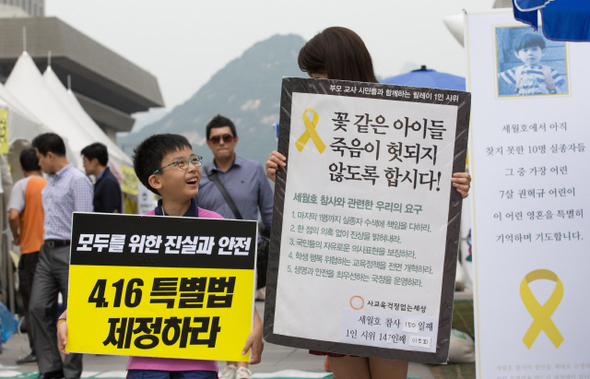
The Park Administration response to the Sewol sinking was absolutely inadequate. Protests and hunger strikes to demand accountability and preventative measures continue to grow five months after over 300 people, mostly students on a field trip, lost their lives.
A family assembles to demand a "safe world for my son."
Apparently some politicians demanding a transparent report on the Presidents' response have been gossiping and speculating on her sex life. Opposition lawmaker Sul Hoon referenced (and dismissed) rumors that President Park was engaging in a "tryst" during a 7 hour period during the tragic Sewol sinking.
President Park participates in mourning the deceased. 
“What did [President Park] do for those seven hours at the Blue House?” Sul asked. “I don’t think it’s true what people are saying about her having a tryst. I think that’s probably not it.”

The resulting political controversy has centered on demands that Sul resign and whether his words were intended to malign the President or to dismiss the rumors. Lost in this discussion is the sexism that the majority party is also leveling at President Park.

While Sul's accounting of the rumors demonstrate a sexist tendency to focus on the unmarried female President's leadership, they also highlight a sense of betrayal and mistrust. The gossip centers on what might have kept the President preoccupied specifically for the 7 hour period during the Sewol sinking.

On the other hand, Saenuri party spokesperson Park Dae-chul's statement blurs President Park's public office and private sex life, and are not limited to a discussion of the Sewol sinking, but extend to a general comment about women's sexuality:

“It’s troubling to think what might happen if there are rumors about ‘the President of the Republic of Korea having a tryst’ going around,” Park added. “The Saenuri Party intends to examine a possible complaint against Sul Hoon to the National Assembly Ethics Committee.”

What might happen?

By emphasizing the "Republic of Korea" in his statement, perhaps spokesman Park calls upon tried and tested fear of Korean womens' bodies and sexuality and the national image. He asks, how might Korea look to other nations?

Is the Saenuri Party particularly sensitive to North Korea state media describing President Park as a "crafty prostitute" in thrall to her "pimp" Barack Obama?" Or is Saenuri still unclear what they meant by the election campaign slogan "Prepared Woman President?" The party cultivates an image of a woman's body and sexuality sacrificed as the "mother of the Korean state" and in control in contrast to the womens' bodies the state aggressively polices and regulates.  

Campaign Slogan: Prepared Woman President


Sources:
Hankyoreh, Opposition lawmaker causes firestorm by referring to president’s “tryst”
Posted on : Sep.13,2014 14:15 KST  http://english.hani.co.kr/arti/english_edition/e_national/655017.html

9.06.2014

Pop Culture & Gender: Why Baekma?

Guest post by the band Baekma. KGC readers will know by now that I (Chelle) dislike the term Baekma,so I asked the band why they choose it and how they are using it to call attention to gender issues. Find the band on Facebook and listen to their music here. 

“What’s the name of your band?”  “Baekma.”  “Huh?” “BAEKMA!” 

The name we chose for our band warrants many types of responses.  Foreigners or Korean women must think we like galloping beautiful ponies when we explain the definition. Korean men, however, are left with looks of surprise, shock or comical amusement. These men almost always ask, “Do you know what that means?” as if we weren’t privy to their dirty little secret. Well, we do know what it means and we chose it to shock you, on purpose.

The phrase literally translates to ‘white horse’ taken from Chinese.  A Korean male friend informed me that it began a few decades ago as slang used to refer to the only Western women one could find in Korea, Russian prostitutes working the streets of Itaewon.  It evolved over time to mean any Western woman.  If this is the true origin, it’s no wonder that the word implies sex. Mumbled drunkenly among chingus when a wayguk woman passes them on the street at 4 am, or mentioned when a buddy returns from a vacation abroad, this word is tossed around between Korean men with curiosity: “What’s it like to ride the Baekma?” “Did you ride a Baekma on your trip to Europe?”

After Korean men realize we are aware of the negative connotations behind our name, we get responses like, “Why would you name your band that?” or “That’s so sexual!”
First off, I suppose we WANTED to be controversial and expose the stereotypes surrounding Western women. We started as an all-girl Western band, coming together after mixed experiences playing in bands with all boys. Besides feeling like we had more to prove since we were women in the music scene, we wanted to confront and challenge the idea that Western women are easy to get into bed or are only valuable in a sexual way. Just because a woman is in charge of her own sexuality, doesn’t mean she is promiscuous or dirty. Just because she has a nice set of legs or arms, doesn’t mean her wish in life is to use them to please a man. Just because she prefers to decide how she wants to look or act regardless of how a man says she should, doesn’t mean she is less beautiful. It’s easy to get disheartened in Korea if you do not fall into the limited impossible standard of beauty. We believe women shouldn’t be seen as less talented, less driven, less intelligent, or weaker than a man because cowardly men prefer it. It’s easy to get disheartened in Korea if you are not used to or do not fall into the very narrow ideal of feminine beauty within this culture. This standard is impossible to uphold without expensive treatments, surgery and/or hours wasted on grooming. Also, many men seem to be holding on the antiquated idea that women’s role in life is to serve them. Sam Hammington, whether speaking from his own mind, or instructed by a producer, said on the Global episode of Happy Together in 2013 that he married a Korean woman because “Korean women are really good to men,” implying that Western women are NOT because they “have their own lives”, “are never affectionate” and “never act cute”. In one quick comment, he reduced Korean women’s existence and demonized the concept of independent women in charge of their own lives. We know that Korean women are tired of their stereotypes and expectations as much as we are. We channeled our frustrations of living in this hyper-sexualized and misogynist society into our music.

There hasn’t really been anyone providing a voice for the foreign women community within the indie rock scene in Seoul. We feel we have a unique perspective on gender issues as we compare progress here and abroad. We hope our voices can support the movement towards gender equality and freedom of women to choose what they want to become not only in Korea, but also worldwide.

So we are BaekMas. We are not offended by that word. We are Baekmas. We act and dress how we want. We say what we feel and believe in. We write songs about the shitty stuff we see happening to people around us that’s sometimes based on gender. We sing about how we want the world to be. We will probably disagree with you. We may even piss you off. We may or may not sleep with you. But we will definitely make sweet love to your ear holes with our synth dance pop rock.

Find information on Baekma's upcoming podcast here.


6.28.2014

"On May 31st I was raped in Itaewon"


I do not know how to start this gently, so I am just going to come out and say it: on May 31st I was raped in Itaewon.  I was out drinking with a friend at G--- Bar (ladies night) and the last thing I remember was doing shots with a man whom I had just met. The next thing I knew I was waking up (in a blurry state of mind) in a dirty love motel and he was raping me. I was unable to do or say anything because I was still very drunk, or drugged, and then I passed out again. The next day I woke up wearing only a t-shirt of his, with vomit in my hair and bruising on the top of my left foot. I had a massive headache and was very confused about what had happened the night before. Immediately I was told that I had vomited and I urinated on myself.  I asked him if we had sex.  

His first reply was no.  I told him that I remembered having sex to which he then confirmed that we did. I could tell that he was also feeling uncomfortable.  At this point he told me I still had my wallet with me and that he had used a condom. Like he had done me a service and I should be thankful for his assistance.  I quickly got my clothes on, which were soaking wet, and went home.  At this point I had not labeled the act rape.  I just wanted to get out of his vicinity as soon as possible. I was so hung over and confused. I had not registered what happened to me.  This is not an unusual response from a person who has been sexually assaulted. Often victims feel that they are somehow responsible and hold themselves accountable for the violation. I experienced a very textbook reaction to the situation.
Later that day, it hit me that I was raped. This harsh realisation came to me when I was retelling the incident to some of my friends. I had to hear my story from a third person perspective. I knew that if another person was telling me this exact story that I would tell them that they were raped. Coming to that realisation was a very difficult process.  I felt very dirty and extremely violated. I did not want to admit that I was a rape victim/survivor.  I did not want to have a personal relationship with that word, a word I had feared for most of my life.
I had R----’s Kakao information (phone number) from the previous night so I messaged him saying I felt that he took advantage of me and that I was in no state of mind to consent to sex. He wrote back saying I was passing out on the street so he took me to his motel where I vomited all over myself and urinated in his bed. He became very defensive and claimed that he had nothing to do with me sexually. He felt that he was entitled to a thank you and not an accusation. This was disturbing for many reasons.
With the support of my friends I went to the one-stop center (sexual assault clinic) at the police hospital. I initially did not want to go.  I wanted to shower and pretend that nothing had happened. I thought that I was to blame. I did not want to retell my story because I was terrified that I would not be believed. That I would be held accountable for the incident.  I did not want to experience the shame that comes hand in hand with victim blaming. I feared that I would not be taken seriously because I was unconscious for the majority of the rape.  All of these reactions are very common for victims of sexual assault.  After I did go and decided to press charges I felt empowered. I had taken control back.
One week later, I saw R----- in Itaewon, which sent chills down my back. He was just walking around like everything was normal.   His normalcy was so unsettling because he appeared to be unchanged by what he did to me.  Meanwhile, I was experiencing anxiety, mood swings, fear and depression.  My sense of safety and security had been taken from me.  I was having dreams of him violating me and me being defenseless to stop it.  I also had dreams of people telling me that I should not drink so much or wear that tank top; of people saying that they hoped I learned a lesson from all this.  R---- seemed as though he was taking a leisurely walk on a sunny day without a worry.
I am an advocate of women’s rights and identify as a feminist. I am passionate about empowering and advocating for women; educating others on the very real inequalities that exist between men and women; and educating others on the impact of rape culture.  I am currently in school for counselling women and would one day like to support victims of violence.  I have feared rape my whole life. I have taken precautions to walk down busy streets at night instead of short cuts. I have asked friends to come to public bathrooms with me. I have had terrifying nightmares about rape since I was 12 years old.  I am well aware of the high incidents of rape, and that most rapes are unreported.  I have friends who have been raped by strangers, boyfriends and acquaintances.  I know that most victims of rape experience re-victimization because of a justice system that was created in a rape culture that blames the victims.  Even with all of this knowledge and my feminism my initial reaction was ultimately the fear of judgment.
While most of my friends were supportive and reassuring I still encountered discouraging comments.  I was told that I was too drunk to really know what happened, that I should not go to the police because there were too many grey areas. I was kindly reminded that I had been sexually irresponsible in the not so distant past.  Essentially, I was told that because I engaged in consensual sex I put myself at risk of being raped.  Essentially, I was being told a woman who is drunk equates to a woman who gets raped and that is just the way the world works.  Recently, I was asked if I felt part of the club now. This is not a club that women desire to be a part of.  I don’t get a free t-shirt and a spot at some imaginary victims’ table.   I am not a “rapable” woman, nor did I or any other victim want this membership.  I was even instructed not to tell my father because it would upset him too much.  Like it was something that happened to him and not to me.  Like I needed to shield him from being ashamed of me.  Like I am damaged now and it is best to keep quiet about it and move on.  All of these reactions by people I love and who love me are examples of how deeply embedded rape culture is in our collective consciousness.
I am writing about this incident openly because I want other women who are unsure if they were raped or are afraid to disclose for valid reasons know that they are not alone.  They are not to blame,  it is not their fault and feelings of confusion are normal.  Sex without consent is rape.  A person who has sex with you without your consent is a rapist.  Just because you drank too much does not mean that you somehow asked for rape.  Just because you have sex does not mean that you put yourself at risk of rape.  Just because you talked to a stranger at a bar does not mean you want to have sex with him.  The responsibility of this dehumanising act lies with the rapist.  Why do we still have to tell grown men and women that rape is not the victims fault? Why is this not common sense in 2014?
I am not damaged goods, I am not a part of a rape club, and I am not defined by this incident.  This act happened to me, but I will not allow it to limit me.  I believe some people would feel more comfortable if I decided to stay home and never to go to another bar again.  That I should learn my lesson and suffer the consequences of constant fear, depression and isolation. That I should act like the victim of rape they see on TV or in the media.  My strength makes people uncomfortable and skeptical of me.  But it is my feminism and my belief in myself that helps me to heal.  My world has not been shattered only readjusted.
I am not a victim or a survivor first. I am woman who has been a victim and a survivor of rape.  I am not ashamed because I know that the shame belongs to R----.

One-stop center at the police hospital is a resource every woman in Seoul should know about.   If you are sexually assaulted find the strength and a friend to go to this center.  They will give you antibiotics to prevent infection, a physical examination, blood and STD tests, a counsellor to talk to and the choice of reporting the incident to the police.  This service was 100 percent free and the staff were professional as well as sensitive.
Caroline

Update: Those interested in further information about police response to sexual assault might be interested to read Raped and alone in a foreign land

4.05.2014

Does "Get your arse out, mate" Trivialize Sexism, Street Harassment and Survivors?

The Guardian posted “'Get your arse out, mate': we turn the tables on everydaysexism – video” which is getting praise from some, but I am critical of the video and its potential to education the public or build solidarity. You can watch the video at the link above or embedded here:
The Everyday Sexism Project aims to document “experiences of sexism, harassment and assault to show how bad the problem is &create solidarity.” How does The Guardian's Leah Green work to that end by targeting random men in the street?
The idea of “turning the tables on men” grabs attention, for sure, and we’ve seen very successful scripted videos like OppressedMajority that speak volumes about sexism and street harassment without, actually, harassing anyone in the process.


Maybe the Guardian video can even been seen as a platform to make people hear the words that have been used against those contributing at Everyday Sexism Project. Great, but that can be done by other means.

Having watched the video, I cannot get behind the method.

First, and most importantly, NOBODY should be spoken to in ways that make them uncomfortable or are intended to intimidate, humiliate, shame, etc. The Guardian’s Leah Green does not work for Everyday Sexism, but “performed” scenarios inspired by the project on men. Let’s unpack those euphemisms a bit. The Guardian/Leah Green read real accounts of sexism and harassment, and decided to pick random unsuspecting men on the street and “perform” intimidating actions, harassment, and hate speech on them. I have been harassed on the street, I would absolutely abhor seeing my story as a ‘scenario’ ‘performed’ on another human being. 

Yet, the issue is controversial and it is sparking debates, like this: 
Second, the scenarios do not necessarily promote awareness of sexual harassment or street harassment and in turn may even contribute to homophobia or trivializing street harassment survivors. When Leah Green drives by and catcalls out the window, did that teach anyone about the harm? Worse, when Leah Green targets and asks pairs of men if they have "ever made out," the Guardian reporter is making big assumptions the men being asked, such as about their sexuality. 

The segment absolutely overlooks the reality that gay men and trans men and others also suffer street harassment. Further, in the minds of the men being asked, or folks watching the video, the ‘scenario performed on’ the men in the video may either trigger memories of other times they have been targeted for harassment based on their sexual and/or gender identity. Or, rather than promoting awareness about harassment, the question could spark socially heteronormative or homophobic responses, rather than clicking so that they 'get' how this question connects to street harassment of pairs of women. The Guardian comes off as policing masculinity and echoes hate speech that some LGBTQ viewers may have experienced, rather than educating anyone about the Everyday Sexism Project.  

Third, the randomly selected men are not necessarily those that attack women that contribute to the Everyday Sexism Project site. We don’t know anything educational about this project, it’s method, etc. we don't know what was explained to these men that were "performed on" or what opportunity they had to learn from this experience. How does that build solidarity, which is the aim of the Everyday Sexism Project?

Street harassment is painful, and being targeted may have been painful for the men in the video, too. One news outlet titles the image below “Guardianreporterprank_large” and yet the same article commends the ‘undercover reporter’ for maybe raising “some much-needed awareness along the way” through what is labelled a prank. Harassment is not a prank. As Jezebel's Tracie Egan Morrissey points out, "the construction workers didn't like being catcalled at all." Harassment simply shouldn't be trivialized like this: 

The Everyday Sexism Project does powerful work by bringing these stories to light. Taking the project onto the streets and getting people who might not otherwise take time to self-educate is impressive. i would commend the Guardian and Leah Green for doing that. But, I am not sure they achieve public education, or do they potentially damage the reputation of the Everyday Sexism Project by using its' name and coming off as serving up random retribution to?  Careful consideration no doubt went into producing this video, and it is a really notably different video with raw reactions from real people that are not scripted. There will be discussion and reflection, for starters:

How seriously are the media taking this issue? How well does the Guardian understand street harassment? Does the video come off as retribution or as a public education project?


1.27.2014

흑형이란? What is meant by Black (Big) Brother?

흑형이라는 말에 대해 어떻게 생각합니까? 인종차별주의적 태도가 보여합니까? 또한 성적 매력을 부여합니까? What do you think of the term Black (Big) Brother? Does it show a racist attitude? Does it show sexualization?

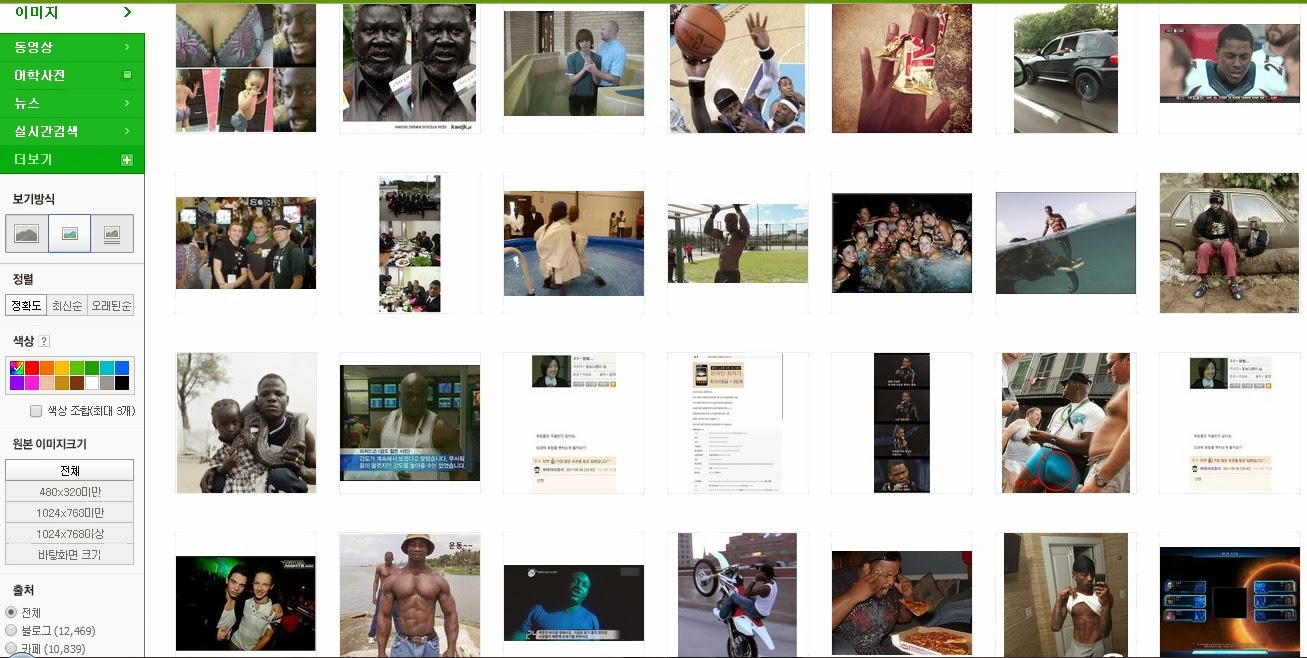
"흑형" 이미지 검색의 결과에 봅시다 Let's take a look at search engine results for the term:
 네이버 Naver:

구글 Google:

"흑누나"의 결과 Black (Big) Sister search term results:

3개월 전에 비공개의 얘기에 봅시다 Let's look at a conversation on Naver from 3 months ago:
Rough Translation: When we use the term "Black (Big? Brother" and thoughtlessly talk down to people with other skin colors, don't you think it can make people of color feel bad and is a wrong thing to do??

Rough Translations:  (top) It isn't talking down. With those words I am going to praise the greatness of Black (Big) Brother and Black (Big) Sister. (middle): It's wrong. But the term is already spread widely. Can't get rid of it People use it a lot ㅜㅜ (bottom with image): The term Black (Big) Brother was made to make people laugh, right? Korea thinks it is so funny so it won't be easy to get rid of. 

네티즌들의 “흑형”이라 붙인 사진에 보면서 인종적 고정 관념에 대해 생각합시다. 이렇게 인해 인종차별주의적 태도가 비판할 수 있다. 예를 들어 억센 팔과 살팍진 몸이 강조하고 이미지의 내용을 평가하면 성관계에 관한 형상화를 많이 본다. When we look at the images that Korean language users attach the term "Black (Big) Brother" to we can think about racist attitudes. In this way we can criticize these attitudes. For example, in the images above we see an emphasis on muscular and sexualized bodies, and that the term is attached to references to sexuality and sexual imagery.

흑형이라는 말에 대해 어떻게 생각합니까? What do you think about the term Black (Big) Brother?