5.13.2014

Korea Queer Pride Fest & unofficial after-party

You can find detailed information about Korea Queer Pride Festival at their website. I am sharing some major event details below:

t01.gif
Festival Breakdown
- Event: The 15th Annual Korea Queer Culture Festival 2014
- Date: June 7th-15th, 2014
- Slogan: Love Conquers Hate
- Program: Queer Parade, Queer Film Festival, After Parties 
- Organizers: KQCF(Korea Queer Culture Festival) 
- Donors: IVANCITY, Google, 80 individual community organizations made up of culture organizations, women organizations and civil society organizations. 

Last December, the 15th Annual Queer Culture Festival started with the slogan Love Conquers Hate, which is now the name of the LGBT campaign spreading throughout the world. Asia Pride in Seoul, will be the main concept of the festival. This event has been organized to invite all Asian LGBT organizations. With this festival, the 15th Annual Queer Culture Festival wants to fight against homophobia, which is a constant problem around the world, including Korea. LGBT organizations and individuals from Taiwan, Japan, Hong Kong, China and India are invited to join the festival. On June 7th, Seoul will be a place where we can express our refute against discrimination and homophobia, and ultimately celebrate our queer culture.

- For additional information please visit:
- Official Homepage. www.kqcf.org


Main Program  
Queer Parade
- When: June 7th, 2014 from 12:00-3:00PM
- Where: Sinchon transit mall, Seoul 
- Concept: Asia Pride in Seoul (Asian LGBT organizations and individuals will come together to celebrate their pride and to feel a sense of unity)  
- Content: Event Booths – Opening Ceremony – Pride Parade – Closing Ceremony
- Expected attendees: More than 20 thousand


Also passing along information about the Korea Pride Fest unofficial after-party with Meet Market at CLUB MWG in Seoul.

ABOUT The Meet Market:
The Meet Market is a safe space and party for the LGBTQIA* community and their allies in Seoul and S. Korea and has been going on since 2011! It features drag, burlesque, dance and all other things good and queer!

Meet Market 소개:
퀴어 커뮤니티를 위한 파티!
2011년부터 시작된 퀴어파티 미트마켓은 게이, 레즈, 바이, 트랜스, 퀴어 서포터즈들 다함께 즐길수 있는 파티로 드랙쇼, burlesque (야한 익살쇼), 등의 다양한 쇼와 음악 ,또 멋진 친구들이 함께하는 파티입니다.

The Event / 이벤트
The Pride Meet Market (The Unofficial Pride Afterparty)
Hosted by: "The Butch-hers"
A party for ALL kinds of queers AND their allies since 2011

Place: Hongdae: Myoung Wol Gwan (MWG) 장소 : 홍대 클럽 명월관
SATURDAY 7 June 2014 9PM-2:30AM 토요일 6원 7일 9~2:30
Cover: ONLY 10,000 won incl. 1 free drink* 임장료: 만원

TWO full shows for Pride
1st show at 12.00am
2nd show at 1.30am

Check out more event details at their Facebook page:
https://www.facebook.com/events/785056638172163/

4.05.2014

Does "Get your arse out, mate" Trivialize Sexism, Street Harassment and Survivors?

The Guardian posted 'Get your arse out, mate': we turn the tables on everydaysexism – video” which is getting praise from some, but I am critical of the video and its potential to education the public or build solidarity. You can watch the video at the link above or embedded here:
The Everyday Sexism Project aims to document “experiences of sexism, harassment and assault to show how bad the problem is &create solidarity.” How does The Guardian's Leah Green work to that end by targeting random men in the street?
The idea of “turning the tables on men” grabs attention, for sure, and we’ve seen very successful scripted videos like OppressedMajority that speak volumes about sexism and street harassment without, actually, harassing anyone in the process.


Maybe the Guardian video can even been seen as a platform to make people hear the words that have been used against those contributing at Everyday Sexism Project. Great, but that can be done by other means.

Having watched the video, I cannot get behind the method.

First, and most importantly, NOBODY should be spoken to in ways that make them uncomfortable or are intended to intimidate, humiliate, shame, etc. The Guardian’s Leah Green does not work for Everyday Sexism, but “performed” scenarios inspired by the project on men. Let’s unpack those euphemisms a bit. The Guardian/Leah Green read real accounts of sexism and harassment, and decided to pick random unsuspecting men on the street and “perform” intimidating actions, harassment, and hate speech on them. I have been harassed on the street, I would absolutely abhor seeing my story as a ‘scenario’ ‘performed’ on another human being. 

Yet, the issue is controversial and it is sparking debates, like this
Second, the scenarios do not necessarily promote awareness of sexual harassment or street harassment and in turn may even contribute to homophobia or trivializing street harassment survivors. When Leah Green drives by and catcalls out the window, did that teach anyone about the harm? Worse, when Leah Green targets and asks pairs of men if they have "ever made out," the Guardian reporter is making big assumptions the men being asked, such as about their sexuality. 

The segment absolutely overlooks the reality that gay men and trans men and others also suffer street harassment. Further, in the minds of the men being asked, or folks watching the video, the ‘scenario performed on’ the men in the video may either trigger memories of other times they have been targeted for harassment based on their sexual and/or gender identity. Or, rather than promoting awareness about harassment, the question could spark socially heteronormative or homophobic responses, rather than clicking so that they 'get' how this question connects to street harassment of pairs of women. The Guardian comes off as policing masculinity and echoes hate speech that some LGBTQ viewers may have experienced, rather than educating anyone about the Everyday Sexism Project.  

Third, the randomly selected men are not necessarily those that attack women that contribute to the Everyday Sexism Project site. We don’t know anything educational about this project, it’s method, etc. we don't know what was explained to these men that were "performed on" or what opportunity they had to learn from this experience. How does that build solidarity, which is the aim of the Everyday Sexism Project?

Street harassment is painful, and being targeted may have been painful for the men in the video, too. One news outlet titles the image below “Guardianreporterprank_large” and yet the same article commends the ‘undercover reporter’ for maybe raising “some much-needed awareness along the way” through what is labelled a prank. Harassment is not a prank. As Jezebel's Tracie Egan Morrissey points out, "the construction workers didn't like being catcalled at all." Harassment simply shouldn't be trivialized like this: 

The Everyday Sexism Project does powerful work by bringing these stories to light. Taking the project onto the streets and getting people who might not otherwise take time to self-educate is impressive. i would commend the Guardian and Leah Green for doing that. But, I am not sure they achieve public education, or do they potentially damage the reputation of the Everyday Sexism Project by using its' name and coming off as serving up random retribution to?  Careful consideration no doubt went into producing this video, and it is a really notably different video with raw reactions from real people that are not scripted. There will be discussion and reflection, for starters:

How seriously are the media taking this issue? How well does the Guardian understand street harassment? Does the video come off as retribution or as a public education project?


2.03.2014

Seoul Event by Hollaback! Korea: Let's put an end to street harassment in our communities!

Join Hollaback! Korea in Seoul for a discussion about street harassment and how we can end it. Hollaback! Korea supporters will meet Saturday, February 8 from 2-4PM at Ben James coffee shop near Hapjeong station exit 5. Hollaback Site leaders from Seosan and Seoul will be present and welcome all members to participate in the discussion and/or share their stories for support. Hollaback! Korea supporters will strategize how to end street harassment in our communities.

Saturday, February 8, 2014
2:00pm until 4:00pm
Cafe Ben James, Seoul Mapo-Gu Hapjeong-Dong 411-5
See details and RSVP on the Hollaback! Korea Facebook page

Community members of all genders, sexual orientations, race, and national origin are welcome to join Hollaback! Korea. Hollaback! Korea founders and supporters are friends, daughters, students, sisters and brothers, workers, supporters, partners, wives and husbands who are Korean nationals, people of color, adoptees, foreigners, ethnic and overseas Koreans, LGBTQ, young and old, single and multicultural family members of Korean society. we come from Seoul, Gwangju, Busan, Daejeon, Jeju, and Daegu to share these stories. We are building an intersectional space to address street harassment and welcome anyone to join this movement.

This is a map depicting the geographic location of (some of) the stories shared to Hollaback! Korea in the two months since the project launched. See the full map at the Hollaback! Korea website. Pink dots visually depict stories shared by the person targeted for harassment, green dots are stories shared by a bystander who witnessed harassment.


1.27.2014

흑형이란? What is meant by Black (Big) Brother?

흑형이라는 말에 대해 어떻게 생각합니까? 인종차별주의적 태도가 보여합니까? 또한 성적 매력을 부여합니까? What do you think of the term Black (Big) Brother? Does it show a racist attitude? Does it show sexualization?

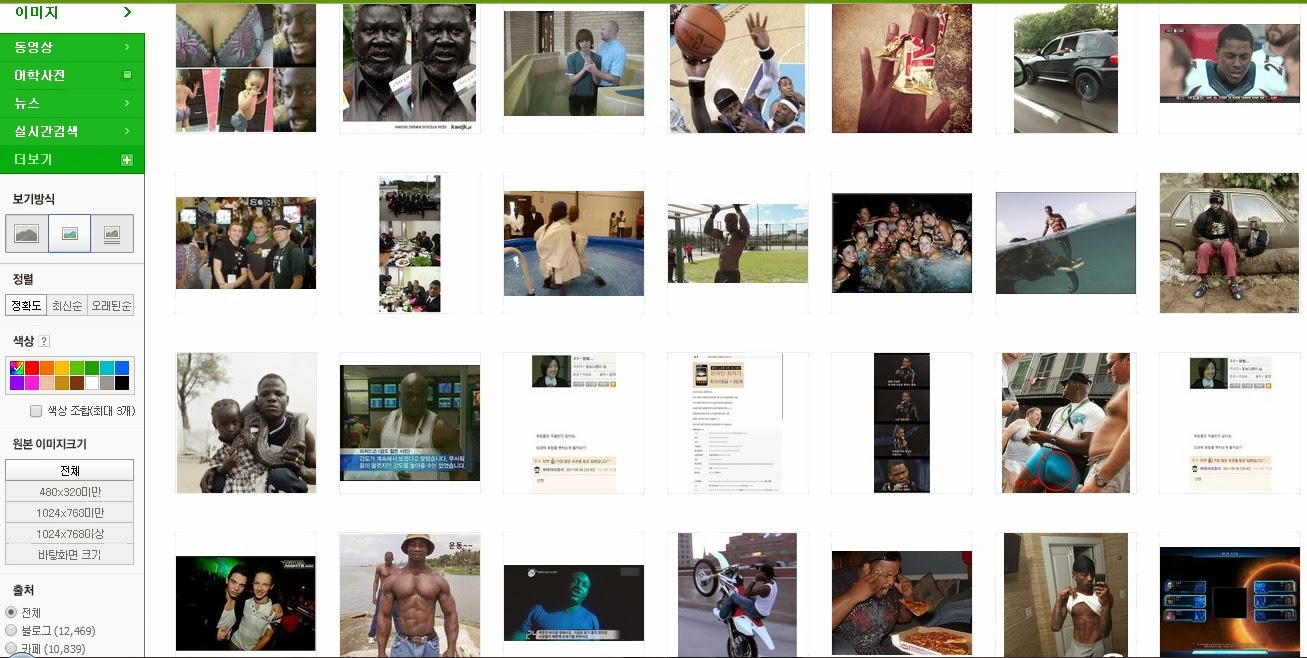
"흑형" 이미지 검색의 결과에 봅시다 Let's take a look at search engine results for the term:
 네이버 Naver:

구글 Google:

"흑누나"의 결과 Black (Big) Sister search term results:

3개월 전에 비공개의 얘기에 봅시다 Let's look at a conversation on Naver from 3 months ago:
Rough Translation: When we use the term "Black (Big? Brother" and thoughtlessly talk down to people with other skin colors, don't you think it can make people of color feel bad and is a wrong thing to do??

Rough Translations:  (top) It isn't talking down. With those words I am going to praise the greatness of Black (Big) Brother and Black (Big) Sister. (middle): It's wrong. But the term is already spread widely. Can't get rid of it People use it a lot ㅜㅜ (bottom with image): The term Black (Big) Brother was made to make people laugh, right? Korea thinks it is so funny so it won't be easy to get rid of. 

네티즌들의 “흑형”이라 붙인 사진에 보면서 인종적 고정 관념에 대해 생각합시다. 이렇게 인해 인종차별주의적 태도가 비판할 수 있다. 예를 들어 억센 팔과 살팍진 몸이 강조하고 이미지의 내용을 평가하면 성관계에 관한 형상화를 많이 본다. When we look at the images that Korean language users attach the term "Black (Big) Brother" to we can think about racist attitudes. In this way we can criticize these attitudes. For example, in the images above we see an emphasis on muscular and sexualized bodies, and that the term is attached to references to sexuality and sexual imagery.

흑형이라는 말에 대해 어떻게 생각합니까? What do you think about the term Black (Big) Brother?

1.25.2014

Street Harassment in Korea

A little over six weeks since launching Hollaback! Korea I have already read about 20 stories from members of our community. I have also seen hundreds of people step up to join our project to end street harassment. At our events and during interviews, a number of people who have not written their stories and shared to the site have also discussed the issue with me.

An audience member at our Bystander Intervention Workshop
I am frequently asked, "What is Hollaback?"

Hollaback is an international movement to end street harassment that is active in 24 countries and over 71 cities in 10 languages. By street harassment, we refer to sexist, racist, transphobic, homophobic, ableist, sizeist and/or classist harassment that often targets women, LGBTQ and transgender community members. This harassment takes place in public places like parks, the subway, on the street or in a shop. Street harassment can be intimidating behavior intended to make the target uncomfortable or scared. It can be verbal, physical, gestures or noises, and other forms of intimidating behavior.

"How was Hollaback! Korea founded?"

We are organizing this project all over Korea, but particularly in Seoul, Gwangju, Jeju, Seosan, Daejeon and Daegu. I started to recruit founding team members last July and we all participated in a 3 month online training course and supported by the iHollaback international team so that we could prepare for the launch in early December. We had a lot of hard work like translating the website and mobile app into English, planning 5 launch events in Seoul, Gwangju and Jeju, moderating and growing our social media presence on Facebook and Twitter, and doing media and press outreach. I am really grateful to our team for their dedication and to our community for their warm welcome.

"How does Hollaback! address street harassment?"

Hollaback! has empowered people in over 70 cities and 24 countries internationally to respond to street harassment through a smartphone or web application. Users are encouraged to speak up when they see harassment by quickly documenting it in a short post (photo optional) and sharing it to a publicly viewable map. Anyone browsing the stories on the Hollaback! maps immediately understands 3 things:

1) If you’ve been harassed, you’re not alone,
2) Street harassment is used to exert control over others by making them feel scared or uncomfortable. It is much more than individuals just acting inappropriately.
3) There are street harassment “hotspots” in most cities often centered around high pedestrian traffic areas.
Hollaback! provides comfort to those harassed, and proof that street harassment is a serious problem warranting a serious response from policy makers.

"Is Hollaback! Korea different from other sites because of domestic law?"  

First, it is important to note that our project is about support and social awareness. We are primarily focused on supporting those targeted for street harassment and to promoting public outreach to stop harassers. We believe that what specifically counts as street harassment is determined by those who experience it.  If you’ve experienced street harassment, we’ve got your back! I highly recommend speaking with an organization like Korea Womens Hotline for more detailed analysis of the law, but I can make some personal observations about Korea law.

I think that the Korean legal system is one of the most well organized in the world. Of course there are differences in legal codes country to country, for example, some countries recognize a Good Samaritan code more than Korea. This means that if you intervene to protect someone in danger you get some consideration for being a Good Samaritan. A major difference might be that although Hollaback users in New York and other cities can post the face of their harasser, on our site we have to blur the face and the names of any businesses in the image. We can, and do, post images, but the face has to be blurred. Some countries have more extensive laws covering street harassment than Korea and some do not have such laws. Right now there is a public indecency law with a fine of 30,000 won on the books.

Learn more

I was recently invited to TBS eFM for an interview about Hollaback! Korea to discuss street harassment and have shared the interview below.

1.01.2014

Subdued New Year's Eve Celebration in Seoul


Jan. 1, 2014

After protests drew hundreds of thousands out to rally against the Park Geun Hye administration, National Intelligence Service (NIS) election interference and railway privatization protests, downtown Seoul drew crowds last night for the annual New Year's Eve celebration near Bosingkak for the ringing of the bell at midnight. Although about 100,000 people came out for the celebration, the mood in Seoul reflected the disenchantment expressed in the "How are you doing" poster campaigns that have been posted on campuses across the nation.

I have attended this celebration at Bosingkak four times and usually it is a quite festival affair. Usually we enjoy upbeat performances and the crowd is quite excited. Each year a rendition of Arirang swells as the crowd sings along. Popular songs from the past year elicit cheers and crowd participation. Fireworks and cheering crowds usher in the New Year and you can barely hear the ringing of the bell over the crowd. Ordinarily the fireworks light up the sky and members of the crowd shoot off many Roman Candles for added color.

Along the stream near Bosinkak you will usually find abundant decorations and light displays, but last night there was only one small grouping of a lit tree. I suspect that decorating for the holidays was a quite low priority this year amidst protests and recession. But it wasn't only the government side of the celebration that seemed... less... than in previous years, it was also the citizens, who despite coming out, were rather quiet and uninspired to ring in the new year. Police crowd control forces in their their yellow jackets and holding red flags were stationed not only at the perimeter of the crowd, but even prominently distributed throughout the crowd this year.

I had a clearer view than in recent years~
Last night, the music selection and performances were quite subdued. Slow and almost sad ballads were the predominant performances, in contrast to the flashy uptempo dance performances in past years. Even when performers on stage tried to elicit crowd participation, asking the 100,000 attendees to sing the chorus or join in some some call and response singing, the crowd was rather quiet. The event seemed either thrown together at the last minute, or intentionally down tempo. Even the b-boy performance was alongside a mellow rendition of Arirrang. As the clock struck midnight, we counted down from 20 and after a brief cheer, a single spray of silver confetti showered the surprisingly quiet crowd. I could distinctly hear the bell, for once.

Earlier in the evening, over dinner, I had said to a new friend, "If we're going to keep debating politics, I'll need a beer!" I think that sums it up for me, to all of our readers, Happy New Year and thanks for contributing to the discussion here at Korean Gender Cafe~

Links to crowd images and coverage:
http://www.yonhapnews.co.kr/society/2014/01/01/0701000000AKR20140101001600004.HTML
http://www.newscj.com/news/articleView.html?idxno=220761
http://www.newsis.com/ar_detail/view.html?ar_id=NISX20140101_0012631286&cID=10201&pID=10200

12.03.2013

Hollaback! Korea Launch & Reflection

The Hollaback! Korea website launched December 3! Hollaback! Korea was founded in August 2013 by a team of 23 volunteers working to address street harassment in Korea. We are the friends, daughters, students, sisters, workers, supporters, partners, wives who are Korean nationals, women of color, adoptees, foreigners, ethnic and overseas Koreans, LGBTQ, young and old, single and multicultural family members of Korean society, we come from Seoul, Gwangju, Busan, Daejeon, Jeju, and Daegu to share these stories. We are building an intersectional space to address street harassment and welcome anyone to participate. Visit Hollaback! Korea at our website, on Facebook, and on Twitter.

Taking the blog off - line the past few months has been really rewarding. Since June I have been recruiting and training side-by-side with a fantastic group of people all over Korea to launch a street (sexual) harassment awareness project called Hollaback! Korea.

This has been one of the most rewarding experiences of the six years I have lived in Korea. Connecting the values of this blog with a project like Hollaback has helped me commit to my work.

I owe a huge debt of gratitude to groups that I’ve learned a lot from over the past few years. The Gwangju International Center (GIC) had a big impact on me during my Gwangju days. I really respected the way that GIC worked hard to integrate community members and provided resources for discussion. In Seoul I have been inspired beyond measure by the people connected to Single Moms’ Day (SMD), which I’ve discussed here on the blog before. I still think SMD is the single most amazing conference I have ever participated in but the group also invited me to see what it was like to have many amazing people participating in a project in a variety of ways. SMD helped me start to engage in communities around me by identifying skills that I did have and could share, and also gave me an aspiration point: I knew that I wanted to keep working hard to learn from others and learn to communicate with others.

I’ve also benefitted from the support of fellow bloggers and writers. I hope there will be future opportunities for feedback and debate, which has been growing in recent months. I have to point out the diligence of the Grand Narrative for sharing information and resources about gender in Korean society, particularly highlighting and promoting the work of others on top of writing great content.

Hollaback! Korea is another type of growth but it is connected to writing and blogging and spreading awareness and many of the core values here at KGC. It has been exciting to interact off – line with team members and to see that events in Gwangju, Jeju and Seoul are engaging people in our discussion. Online, between Facebook, Twitter and the Hollaback Website we have a lot of opportunities to engage and I look forward to the ensuing conversations.

It’s been challenging to juggle the preparation for launch, particularly producing accurate content in Korean. I hope our mobile app is accurately translated and will be useful. Preparing something professional and engaging in Korean is a different experience than writing book reviews, research papers or messing around on my blog in Korean.

It’s been difficult to team build and effectively communicate with a team that is living all over this country. Our team of volunteers has been really energetic and creative. I am lucky to be surrounded by so many talented individuals. Especially those whose talents are so different from my own. I can’t adequately describe how awesome it is to have assembled this group of my favorite and most inspiring peers and then work on a project like this together!

It has been difficult to reach out beyond my own communities and seek new friends. However, this might be my favorite part of this project (and this blog). I started to write because I thought that my passion for my studies was a bit solitary. I want to share ideas and have broader conversations. As a result, I am learning volumes from new friends. I appreciate the lessons and appreciate the mistakes that I make as I take steps forward.

11.13.2013

Event: Hollaback! Gwangju, Fri Dec 6, 7PM In the Groove Lounge


Hollaback is a project to address street (sexual) harassment in our communities. The Hollaback! Korea website will launch November 27! Help us spread the word about the project as we start a new chapter of Hollaback in Korea. We will hold an introductory discussion about the issue of street harassment, Hollaback as an international nonprofit, and our goals for HB Korea.

RSVP for the event on Facebook at Hollaback Korea 할라백 코리아

11.12.2013

Thank You


Hello Readers,

Thank you for your ongoing support.

Jenderole and I are the founder and main organizers of this blog.

We have both gotten sucked into our thesis research. We are researching, writing (and eventually publishing, gulp) about causes very much in the spirit of Korean Gender Café: gender theory, human rights, LGBTQ rights, sex trafficking, media, law and sex workers rights. For us, this online conversation serves as a motivator in our offline research and a way for us to reach out to you.

This blog was born a little over 14 months ago. We used to hang out together at coffee shops and talk about gender and politics, news, sociology, history, sexuality, and you name it~ We practices communicating about these ideas in English and in Korean. We wished for a way to take our conversations online and share them with wider audiences. We wanted to open a space for discussion.

However, to open space for discussion, we need ongoing participation from our readers and we need your trust. We need to you to add to the discussion in the comments section, to write to us and pose topics, to be a guest contributor to this blog. We need you to build trusting conversations and safe spaces with your friends about the issues we discuss here, to show each other respect and to really do the work of understanding one another.

We want to recognize and deeply thank our contributors over the past year. We enjoyed learning from you and with you, and we were honored to host your thoughtful posts.

Thank you to our friends who helped with editing on the site and with writing. Thank you DaJung, Enzo, Deborah, Chloe, Tamara, Taylor and Bryan.

We have also gotten busy building a great team of folks that are organizing Hollaback! Korea and hope to engage many of our readers in offline projects for public awareness and discussion about street sexual harassment.

In the coming year you can expect more content from us, more offline engagement, and you can expect us to continue to be honored to host guest posts on a variety of topics. Please contact us if you would like to be considered for a guest post.

Let's talk!
Chelle B. Mille

11.07.2013

Testify, PART III: Sex After Sexual Assault 성폭행 후의 성생활 [Guest Post]

Join us in thanking guest blogger Chloe Lee Myunghyun, an organizer of Disruptive Voices, for sharing this final installment on her series about sexual assault, police reporting and dating after assault. Please also read Part I: The Morning After and Part II: Latent Rapists
-Chelle B Mille

PART III: Sex After Sexual Assault 성폭행 후의 성생활

사건 사고 발생일로부터 이미 1년 4개월, 내가 성폭행 생존자라는 것을 깨달은지 8개월째.
A year and four months after the attack, and 8 months since I realized I am a survivor.

재미있는건 자신이 어떤 상황에서 피해자임을 깨닫는것 만큼 자의식이 뚜렷해지는 일도 없지만 그만큼 섹스에 대한 태도도 바뀐다. 내가 처음 "내가 당한일은 그가 술마셔서, 약을 해서야"등 그에게 변명을 대줬고 끊임없이 당시 무력했던 자신을 자책한 것은 이미 거론했다. 그러나 시간이 흘러가면서 더 이상 이런 자기연민에 빠져있는 피해자가 아닌, 이 일로 다른 사람들을 도울수 있는 생존자가 되려고 노력했다. 나의 대처 방법은 남들에게 나의 이야기를 하는 것이었다. 이를 통해 성적 학대에 대한 이야기들을 주위에서 더 많이 듣게 되었고 무섭게도 얼마나  흔히 있는 일인지 깨달았다. 말을 할수록 자신에게 대한 수치심이나 부끄러움도 덜었다. 얘기할 때마다 나는 더 큰 해방감을 느꼈다.

The funny thing is there is nothing more that awakens the consciousness than discovering that you are a victim, but my attitude towards sex had changed permanently. In the beginning, I came up with all sorts of excuses to for him, "This happened to me 'cus he was drunk, 'cus he was high", and I have already mentioned how much I faulted my helplessness. As time passed, I no longer wanted to be a victim wallowing in self-pity, but worked hard to become a survivor that could help others through my experience. My way of dealing with it was to tell others my story. The more I told my story, the more individuals around me came forward with their own stories. The more I talked about it, the more the shame and humiliation wore off. I felt more liberated every time I shared.

그러나 이 이야기를 쉽게 꺼낼수 없는 상대들이 있었다. 이들은 나의 섹스 파트너들이었다.  내 파트너 중 가장 가까운 친구외에는 그 누구에게도 내 이야기를 말하지 않았다. 나의 대다수의 파트너들은 친구도 연인도 아닌 애매한 사이의 상대들이었고 이런 나의 일을 털어놓으면 애매한 사이가 더 틀어지는 건 뻔하다. 그들과 은밀한 나의 일부를 공유하면서도, 나의 은밀한 일들을 말할수 없는게 참 모순이다. 끌리면 가능했던 섹스, 나는 소위 "해방된, 개방적인 성생활"을 누리고 있다고 생각했지만 되돌아보면 완전히 깨어있는 정신으로 섹스를 한 적이 별로 없었다. 더 짜증나는 사실은 나에게 있었던 일이 강제추행이라는 것을 깨닫고 난 후 섹스 할 때마다 자신의 트로우마의 흔적을 다시 보게됐다. 내가 당한게 범죄라는 것을 알기 전에는 이러한 증상에 시달리지 않았다. 이런걸 보면 차라리 몰랐으면…이라는 생각도 든다.

But there were certain individuals I could not share my story to. Those were my sex partners. Excluding one that is a close friend of mine, I did not tell anyone else. All of my partners have been in-betweens, someone lost between friend and lover, and I knew the already-awkward relationships would turn terribly awry if I told them what had happened to me. It was ironic how I could not be intimately comfortable with them even though I was sharing a part of me that was intimate. I was living a "liberated and conscious" sex life, yet looking back I can count how many times I have had completely sober sex. The brunt of this turmoil was that the trauma hit an all-time high after once my experience was labeled “sexual assault”. I have been seeing traces of my trauma smudged under the sheets, on the ceiling, and the four walls of every bedroom I was intimate in. I didn’t suffer from such symptoms before it was called assault, and I sometimes wonder if it was better not knowing at all.

이 일이 있는 전까지는 첫 경험한 남자하고만 잠자리를 가졌었다. 당시 우린진지한 사이도 아니었지만 섹스에 대해 꽤 보수적이었다. 그러나 그 일 이후로 새로운 "성적 자유로움"을 찾은 나, 진실로 성 주체성을 되찾은 것인가 아님 아직도 트로우마에서 헤어나오지 못하는 것인지? 나는 전자라고 믿고 싶다.

Before the incident, I was that girl, physically and emotionally loyal to the man I lost my virginity to. He was merely a distant friend; I suppose I was quite conventional in a sense . But after a failed attempt at prosecuting my perpetrator, was my new-found "sexual liberation" truly a statement of my restoring my sexuality or was I in denial about my healing? I hope for the former.

경찰서 사건 이후로 이 일이 산산조각난 후 만나고 있는 점잖은 친구 한 명과 처음으로 제대로된 성관계를 가졌다. 그리고 잠에 들었는데 그날 저녁 강간 당한 꿈을 꿨다. 꿈에서 나는 곧바로 병원에서 검사를 받고 증거물을 가지고 경찰서에 가서 신고했다. 신고 대상도 아닌게 한이었나보다. 다음 번에는 그와 섹스를 한 후 순간 너무 더럽게 느껴졌고 갑자기 공황증상까지 오기도 했다. 예상치도 못한 기이한 상황들이 벌어지자  나는 투쟁 정신이 강해졌다. 한동안은 금욕주의자가 될까도 생각해봤지만 이 일로 하여금 내 자신을 더 이상 자책하거나 벌주고 싶진 않았다. 무엇보다도 끌리는 사람이 있으면 자연스럽게 원하게 된다. 물론 가장 이상적인 상황은 나를 아끼고 사랑해주는 상대를 만나 나에게 있었던 일들을 모두 얘기하고, 그가 날 이해해주고, 날 더 사랑해주고, 우린 열정적이고 불타오르는 섹스를 할 것이고 등등.. 말해봤자 희망사항일뿐 난 내 자신을 위해 더 현실적인 방법으로 대면해야 했다.

One of the first times I had sober sex after the incident, I fell asleep after and dreamt that I got raped. The morning after I went to the hospital and filed a police report with the evidence at hand. I must have been hung up about not being validated. The next time, it felt so dirty after and I had a panic attack where I felt like I was drowning. As these strange events occured, I only wanted to fight this even more. For some time, I wondered if I should become celibate but I no longer wanted to blame or punish myself for what happened. On top of that, I naturally crave intimacy when I meet someone I am attracted to. Granted, the most ideal scenario would be to be intimate with someone that loves me and I will feel comfortable to tell them everything and they will understand, love me even more and we will have passionate, hot sex, etc but these are unrealistic demands. I had to make more practical decisions about my sex life.

시간이 지난 후 또 끌리는 상대를 만났다. 이때는 정말이야 말로 이 트로우마이고 뭐고 자유로운 섹스를 하고 싶었다. 그리고 정말 오랫만에 잠자리에서 다른 남자를 상상하지 않고그냥 그에게 너무 끌렸다. 도중 화장실이 급해 침대에서 일어나 혼자 화장실로 들어갔는데 나도 모르게 울기 시작했다. 울면서도 계속 내 자신에게 "안돼, 이걸 이겨야 해"라고 하면서 화장실에서 나와 그는 마저 2시간동안 침대를 달궜다.

After some time, I met another person I was undeniably attracted to. Trauma or not, I wanted to enjoy sex openly. And for the first time in a long time, I had sex with him without fantasizing about someone else. I was just so attracted to him. In the middle, I had to pee so I went to the bathroom alone and I started crying uncontrollably. Even through the tears, I told myself, "I need to fight this," and came out looking fresh and we heated up the sheets for two more hours.

모임에 있는 친구들에게 성적 학대 후 성 생활에 대해 물어봤을때 그들은 시간이 약이라고 한다. 그러면서도 가끔 좌절하게 될때도 있다고 한다. 인생의 모든 안 좋은 추억과 일들처럼, 흔적은 남는다. 나에게 정답은 없다. 내가 다음에 만날 상대와 잠을 잤을 때도 똑같이 고통스러울까? 아니면 아무런 느낌도 없을까? 지금만큼은 이 노이로제에서 벗어나고 싶다. 그러나 제발, 제발... 아무 느낌도 없는 섹스만 아니었으면 좋겠다.

When I ask my friends from the meetings about sex after sexual assault, they that it gets better with time. But that you still have your moments. Just like everything bad you go through in life, the traces remain. I have no real answers. Will I still hurt with the next man I sleep with? Or will I feel nothing at all? All I want right now is a peace of mind. But please, please... I just wish for anything but sex that doesn’t make me feel anything.


Check out Disruptive Voices for discussion groups about consent, violence, and other topics: